
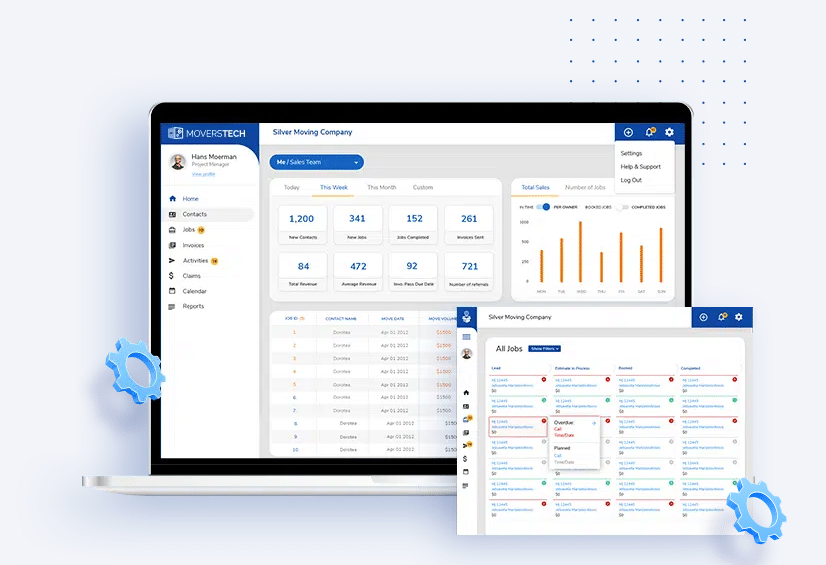
Moving software reduces overhead by automating billing and scheduling, improving crew and truck allocation, tracking inventory, preventing costly errors, and revealing where money is being lost. These efficiencies help moving companies control labor, fuel, administrative, and customer service costs.
Moving companies run on thin margins, and overhead is where they get thinner. Fuel, labor, and overtime, admin hours, paperwork, and billing that slips — each one adds up quickly, and most of it is easier to control than owners assume. The right moving software cuts into those costs directly: it automates time-consuming work, reduces the errors that cost money to fix, and gives you the data to see where money is leaking. This article breaks down exactly where a moving CRM reduces overhead, and how.
Where moving software reduces overhead costs
Moving software cuts overhead in five main areas:
- Automating manual processes
- Optimizing crews, trucks, and resources
- Managing inventory more accurately
- Improving customer service
- Making decisions from real data
| Overhead cost | How moving software reduces it |
|---|---|
| Admin labor | Automates invoicing, payments, and scheduling so staff stop re-keying data |
| Overtime | Right-sizes crews per job so you’re not over-staffing or paying avoidable overtime |
| Fuel & truck downtime | Schedules vehicles efficiently and tracks transportation expenses |
| Lost & damaged items | Tracks inventory location and status, cutting replacement claims |
| Billing leakage | Ties charges to jobs so nothing goes unbilled or uncollected |
| Paper & errors | Digital documents and e-signatures remove printing and rework |
Automating manual processes
The most immediate savings come from automating the work that eats office hours: invoicing, payment processing, and scheduling. Automation removes manual data entry and the errors that come with it — and those errors are expensive, since fixing a wrong invoice or chasing a missed payment costs far more than getting it right the first time. Invoices generate automatically from job data, payments can be accepted online or over the phone, and the whole cycle moves faster; it’s part of how some movers have cut quote-to-payment time in half. Automated billing and payments are usually the fastest place to see overhead drop.

Optimizing crews, trucks, and resources
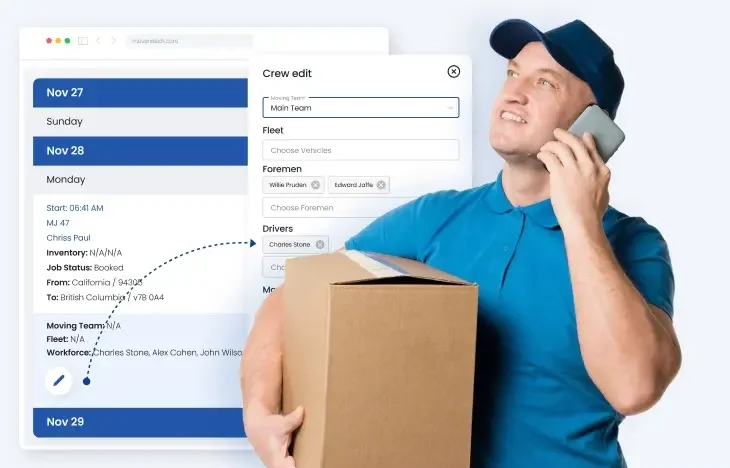
Labor and vehicles are two of the largest line items a mover carries, so optimizing them is where the biggest overhead savings live. With scheduling that matches the right crew size to each job, you avoid both over-staffing and the avoidable overtime that quietly inflates payroll. The same applies to trucks and equipment: scheduling them around actual job demand reduces downtime and keeps you from running — or buying — more than you need. Dispatch handled in one system makes that allocation far easier, and on longer hauls, it helps you stay on top of the fuel costs that quietly erode profit.
Managing inventory more accurately
Tracking the location and status of every item reduces the risk of loss or damage — and every lost or damaged item is a replacement cost, a claim, and an unhappy customer. Accurate inventory also means customers get reliable information on where their belongings are, which improves satisfaction. Reporting on inventory levels helps you keep the right amount of packing materials and storage space on hand instead of over-buying, and accurate inventory lists cut the errors that turn into claims later.
Improving customer service
Better service isn’t just good for retention — it lowers the cost of handling problems. Real-time updates on a move’s status and a single place for communication mean fewer complaints, and fewer complaints mean less staff time spent resolving them. A central record of each customer’s contact details and move history lets your team give personalized, accurate service without digging through scattered files. Resolving issues quickly and keeping customers informed is also what earns the repeat business and referrals that cost nothing to acquire.
Making decisions from real data
You can’t cut a cost you can’t see. Reporting on revenue, expenses, and profitability shows managers exactly where money is going and where it can be trimmed — overtime creeping up, a route running unprofitably, a service costing more than it earns. Real-time reports let you catch those trends while you can still act on them, rather than discovering them at year-end. Digitizing records this way is a big part of why moving companies are going paperless — it cuts printing and storage costs while making the data easier to use.
Turning software into lower overhead
From automating billing to right-sizing crews, optimizing inventory, and surfacing the numbers that reveal waste, moving software attacks overhead from several directions at once. The companies that adopt it don’t just save on any single line item — they get a clearer view of their whole operation, which is what makes sustainable cost control possible. For a fuller picture of the economics, see how CRM software reduces costs.
Frequently Asked Questions
How does moving software reduce overhead costs?

It cuts overhead in several ways at once: automating invoicing, payments, and scheduling to save admin labor; right-sizing crews and trucks to reduce overtime and downtime; tracking inventory to lower loss and damage claims; tying billing to jobs so nothing goes unbilled; and reporting on expenses so managers can spot and trim waste.
What's the highest cost a moving CRM helps control?
For most movers, it's labour. Scheduling the right crew size for each job avoids both over-staffing and avoidable overtime, which is usually one of the largest and most controllable overhead lines a moving company carries.
Is moving software worth the cost for a small company?
Often, yes — the savings in admin time, fewer billing errors, and reduced overtime tend to outweigh the subscription, even for smaller operations. The clearest way to judge it is to compare the software cost against the hours and leakage it removes; our breakdown of CRM costs for movers can help.
